Department of Physiology
Over View
The Department of Physiology being one of the three basic pioneer departments of the Sri Manakula Vinayagar Medical College and Hospital has been given the responsibility to impart medical education to the first year medical students since the inception of the college in 2005-06. The department has come a long way since then, under the guidance of senior experienced faculty members having good teaching and research background. A number of faculty members served the department from time to time and played pivotal role in improving the department and taking it to new heights.
Vision
To provide Under Graduates and Post Graduates a comprehensive knowledge of normal functions of various organ systems of the human body and to facilitate better understanding of the physiological basis of health and diseases through interactive and interdisciplinary learning approaches that enable them to serve the humanity competently.
Mission
- To impart the highest possible standards of excellence in knowledge, skills and attitude through a well-designed curriculum in physiology.
- To collaborate with other disciplines to improve learning of physiology in an integrated manner.
- To foster the development of critical thinking and decision making skills with early clinical exposure.
- To engender a culture of continuous learning by active participation and involvement in all academic and research activities.
Program Specific outcomes
UG – Department of Physiology
Generic outcome
To provide comprehensive knowledge of normal functioning of various organ systems of the human body and to facilitate the understanding of physiological basis of health and diseases.
Program Specific Outcome
- Understanding of normal functioning of various organs and organ systems of the human body
- To understand the patho physiological basis of the disease.
- Distinguish between normal and abnormal data findings obtained as a result of tests which he/she has performed and observed in the laboratory.
PG – (M.D) Department of Physiology
A post graduate student having qualified the MD (Physiology) examination should be able to
- Understand and deal with all aspects of general, systemic and applied Physiology.
- Teach effectively the basic physiological mechanisms of human body with reference to their implications in the pathogenesis of diseases (pathophysiology) affecting various organ systems and the physiological basis of their management to undergraduate medical, paramedical and all other basic science students.
- Understand general principles of medical education (use of appropriate teaching techniques and resources).
- Explain how the knowledge of physiology can be effectively used in a various clinical settings to solve diagnostic and therapeutic problems.
- L Interpret and evaluate research publications critically.ist Item
- Use the library facilities (Literature database using computer, CD ROM, internet search and any other available newer techniques).
- Conduct relevant clinical/experimental research which may have significant bearing on human health and patient care.
- Interpret the research findings in the light of its basic and applied significance.
- Acquire skills in conducting collaborative research in the field of physiology with allied sciences, clinical sciences and biomedical engineering.
- Interact with the allied departments and render services in advanced laboratory investigations.
- Serve as interface with society at large.
- Acquire administrative skills to set up concerned department / laboratories and initiate purchase procedure and procure necessary items for running such laboratories.
- Function as a member of a teaching or research team.
Academics
Undergraduate training
- For UG training, we follow physiology curriculum as prescribed by the MCI.
- The entire curriculum is prepared before the beginning of a new batch and will be displayed in the notice board every month for students’ awareness, interaction, and feedback.
- Students are trained by variety of Teaching Learning methods to improve their knowledge, skill and attitude. Their progress in learning is assessed periodically by internal examinations and feedback is given individually to improve their performance. We also collect feedback at the end of every year from each batch and consider their valuable suggestions in the curriculum design.
- All UG students are motivated to participate in state level and national level “Quiz” program conducted every year and adequate training is given by experienced faculties.
- e-learning : Department of physiology is flexible in its approach and adapts new Teaching Learning methods from time to time keeping the students interest and changing trends in mind.
Post Graduate training
- The Department is privileged to be given permission for post – graduate training in MD (Physiology) since 2011 for 3 candidates per year. PG teaching programs are executed as per MCI norms and Pondicherry University PG curriculum.
- The skilled faculties play a pivotal role in training the PG’s in becoming not only dynamic and inspiring teachers creating enterprising doctors of the future but also are trained in Research skills. Thus the faculties play an important role in enabling the PG’s in analyzing lucid skills of teaching the paradigms of medical physiology.
- Publication of research works and presentation in national/Internation Journals.
- Seminar: Every month a seminar is scheduled under the guidance of a moderator.
- Research: Motivation and guidance is given to all PG students to do research and participate in national and international workshop and conferences.
- Journal Club: Similarly, each month a journal club is held with prior intimation of the research article to all the faculties.
- Feedback by guide and senior faculties
- Pedagogy: PGs are trained to present pedagogy often to enhance their presentation skills.
- Theory and Viva exams at regular interval.
B.Sc. Nursing and Post Basic Nursing
The nursing care of patient forms most important part of hospital. The nursing courses have been recognized by Indian nursing council, New Delhi from the year 2007. The B.Sc. nursing course has an intake of 100 students with Physiology theory classes of 60hrs. Post basic Nursing course has intake of 30 students with 45hrs of theory teaching programme as per the curriculum of Indian nursing council.
Teaching Methods
- Lecture classes: The department imparts education and training to 150 students of 1st Professional M.B.,B.S., in the subject of Physiology. I MBBS year students are exposed to theory teaching in the form of didactic lectures with scheduled hours as per the MCI norms.
- Practical: Hematology and clinical practical are scheduled as per MCI norms. Demonstration by faculties followed by small group OSPE/OSCE training is imparted to the students.
- Small group teaching: Physiology department emphasizes small group teaching in form of tutorials.
- Case base learning: Case reports from hospital are collected and case scenarios are prepared by department faculties and discussed in small groups.
- Integrated teaching and learning: Vertical and horizontal integration is done for various topics in physiology.
- Internal assessment & feedback: Every month an internal assessment is conducted for the I year MBBS students and structured feedback is given for the students individually.
special clinics
Facilities
Labs in the department
- Hematology lab: The lab has seating arrangements for 90 students. Adequate number of laboratory items, for performing hematological experiments including compound microscopes are available in the department.
- Clinical lab: A spacious clinical lab equipped with various facilities is available to carry out the clinical and human experiments.
- Amphibian lab: It has many instruments and facilities to do experiments to understand the nerve muscle Physiology.
- Mammalian lab: Various instruments, like Dale’s apparatus, Langendroff apparatus, and Mariotte’s bottle to carry out mammalian experiments are available.
- Research lab: An autonomic research lab equipped with the following instruments to carry out research studies on humans is available in the department:
- Heart Rate Variability (HRV): It is used to assess the sympathovagal balance in an individual at a given time, which reflects the cardiovascular functioning and risk stratification.
- Evoked potential: Brainstem evoked potentials, visual evoked potentials and motor evoked potentials can be recorded measuring the electrical activities generated from the brain.
- Pulmonary Function test: Computerized spirometry to evaluate the lung functions and disorders.
- ECG: Automated ECG with 12 leads is available in the department.
- Nerve conduction study: Helps to evaluate the conduction of electrical impulses along the nerve.
- Body Fat analyzer: It analyzes the body fat composition, BMI, skeletal and subcutaneous fat in the body based on bioelectrical impedance.
- EMG: Electromyography technique for recording and evaluating electrical activity in skeletal muscles.
- Treadmill: Computerized 12 lead treadmill for stress test to measure heart rate and blood pressure during exercise and recovery period.
- Reaction Time Apparatus: To determine the reaction time to visual stimuli is available in the department.
- Hematology lab: The lab has seating arrangements for 90 students. Adequate number of laboratory items, for performing hematological experiments including compound microscopes are available in the department.
- Clinical lab: A spacious clinical lab equipped with various facilities is available to carry out the clinical and human experiments.
- Amphibian lab: It has many instruments and facilities to do experiments to understand the nerve muscle Physiology.
- Mammalian lab: Various instruments, like Dale’s apparatus, Langendroff apparatus, and Mariotte’s bottle to carry out mammalian experiments are available.
- Research lab: An autonomic research lab equipped with the following instruments to carry out research studies on humans is available in the department:
- Heart Rate Variability (HRV): It is used to assess the sympathovagal balance in an individual at a given time, which reflects the cardiovascular functioning and risk stratification.
- Evoked potential: Brainstem evoked potentials, visual evoked potentials and motor evoked potentials can be recorded measuring the electrical activities generated from the brain.
- Pulmonary Function test: Computerized spirometry to evaluate the lung functions and disorders.
- ECG: Automated ECG with 12 leads is available in the department.
- Nerve conduction study: Helps to evaluate the conduction of electrical impulses along the nerve.
- Body Fat analyzer: It analyzes the body fat composition, BMI, skeletal and subcutaneous fat in the body based on bioelectrical impedance.
- EMG: Electromyography technique for recording and evaluating electrical activity in skeletal muscles.
- Treadmill: Computerized 12 lead treadmill for stress test to measure heart rate and blood pressure during exercise and recovery period.
- Reaction Time Apparatus: To determine the reaction time to visual stimuli is available in the department.
Department Library
The department is well equipped with total 213 books written by Indian and international authors.
Museum
The museum has historical scientist’s photos and physiology models prepared by the students for display.
Faculty list
| S. No. | Faculty Name | Designation | Department |
| 1 | Dr. Soundariya. K | Deputy Dean (Academic-UG) | Physiology |
| 2 | Dr. Deivanayagame | Professor | Physiology |
| 3 | Dr. Nalini Y C | Professor | Physiology |
| 4 | Dr. Deepika. V | Associate Professor | Physiology |
| 5 | Mrs. Senthamil Selvi. K | Assistant Professor | Physiology |
| 6 | Dr. Pooguzhalai. S | Assistant Professor | Physiology |
| 7 | Dr. Sunil Naik | Assistant Professor | Physiology |
| 8 | Dr. Renugasundari | Assistant Professor | Physiology |
| 9 | Dr. Athira. S. B | Assistant Professor | Physiology |
| 10 | Mr. Vinu Balan | Tutor | Physiology |
| 11 | Dr. Gavaskar. R | Tutor | Physiology |
| 12 | Dr. A. S. Bharath | Tutor | Physiology |
| 13 | Ms. Elakiya. M | Tutor | Physiology |
| 14 | Dr. Dharangini | Tutor | Physiology |
| 15 | Dr. Niranjini | Tutor | Physiology |
| 16 | Dr. Mithun. K. V | Tutor | Physiology |
| 17 | Dr. Nalina | Tutor | Physiology |
| 18 | Dr. Rajkumar. E | Tutor | Physiology |
Research
Articles published from the department
2012
- Chandra Kala B.S, Nagaraj D and VeerendraKumar M. Latency of VEP P 100 waveform in relation to age and check size. Biomedicine 2012; 32(1):33- 38.Chandra Kala B.S, Shivakumar Veeraiah, Nagaraj D. Study of amplitude of VEP p100 waveform in relation to age & check size. Biomedicine 2012; 32(4):516- 520.
2013
- ChandraKala B.S, Veeraiah, S. & Nagaraj D. Study of latency and amplitudes of P100 waveform in relation to gender. Biomedicine 2013; 33(1): 117-122.
- Shivayogappa S Teli, Muniyappanavar N S and Dixit P D. Assessment of cardiovascular risk in young asymptomatic smokers: A physiobiochemical study. Biomedicine: 2013; 33(2): 232-36.
- Soundariya K, Neelambikai N. Influence of anthropometric indices on pulmonary function tests in young individuals. WJMS.2013; 9(3): 157-161
- Soundariya K, Bhagyalaxmi C. A comparative study on the QT interval duration between Prehypertensives and Normotensives. Biomedicine 2013; 33(4):578-582
- Deepika V, Sheela R. Role of ocimum sanctum on noise stress induced alterations in glucocorticoid and carbohydrate metabolism. IJ PBS. 2013; 4(4): (B) 29 – 39
- Muniyappanavar NS, Shivakumar J, Dixit PD, Jnaneshwara Shenoy, Shivayogappa ST, Chandrashekar KA. Impact of Asymptomatic Idiopathic Scoliosis on Pulmonary Function. NJPPP 2013; 3(2): 153-157
2014
- Senthil velou M, Gnanadesigan E, Selvam V.S, Bethiun S. Depression, Anxiety and Stress levels among individuals with siblings and individuals without siblings. SJAMS. 2014; 2(5B): 1601-1605
- Senthil velou M, Sivayogappa Teli, Deepika V, Thendral V, Rohini. Influence of Physical Activities on the Academic Performance of Medical College Students. IJPAB. 2014; 2 (4):106-111
- Senthil velou M, Senthamil selvi K, Shivayogappa Teli, Soundarya K, Thendral V. Prevalence of Single Child (Individuals Without Siblings) in our Society: A Cross-Sectional Study from Puducherry. 2014; 2(4A): 1206-1209
- P Venkatesh, K. Soundariya, V. Deepika. A Study on Attitude of Medical Students towards Learning of Communication Skills. JEMDS. 2014; 3(27): 7567-7573
- Chelikam Rohini, Anilkumar M, Prabhakar Reddy E. Acute Sympathetic vasoconstriction at rest and during dynamic exercise in cyclist and sedentary humans. JCTClMlB. 2014;(1)4:29-34
- AnilKumar M, Chelikam Rohini, Prabhakar Reddy E, Siva Kumar V, Srinivasa Rao P.V.L.N. Branched chain amino acid profile in chronic kidney disease patients. JPBMS. 2014;04(03):256-260
- Muniyappanavar N S, Shivayogappa S Teli. Dixit P D. Pulmonary Flow Rates In Adolescent Idiopathic Scoliosis. IJ M HS. 2014; 3(1): 123-126
- Divya R, Chandra S, Ashok V, A comparative study of biochemical markers of renal function and creatinine clearance in hypertensive and normotensive males. International Journal of Recent Trends in Science And Technology, 2014; 11(2): 241-244
- Abeetha S, Dr. Mitali Srivastava, Dr. Shivali Srivastava. Progression of Acute Transverse Myelitis to Multiple Sclerosis IJBAMR. 2014; 3(1): 233-236
- R. Hemavathy, Dr.M.Senthilvelou, Dr.S.Chandra, Dr.M.JhansiRani, Dr.K.Soundariya. The alarming impact of obesity in inflammation by correlating with high sensitivity C-reactive protein in adults. IJBAMR. 2014; 3(4): 341-349
- Husamuddin N, Dr. Shiva Yogappa T. Effect of Acute sleep deprivation on blood cell count in healthy young Individuals. IJ BAMR. 2014; 3(4) 130-133
2015
- Shivayogappa S, Senthil velou M, Paramasivam L and Divya D. An experimental Study on immediate effect of direct barefoot contact with earth on prehypertension. IJMRR. 2015; 3(8): 836-840
- Soundariya K, Deepika V. Prevalence of Internet addiction among Medical students. Biomedicine 2015; 35(4): 363-367.
- Soundariya K, Neelambikai N. Influence of Exercise on Pulmonary Function Tests in Young Individuals. IJCAP. 2015; 4(2): 181-184.
- Senthamil Selvi K, Subathra B. Urinary pH and Insulin Resistance in offspring of Diabetic Parents. IJPAS. 2015; 69(3): 121-124
- Deepika V, Soundariya K, Venkatesh SP, Senthamil Selvi K. Prevalence of taste blindness to Phenylthiocarbamide among Smokers. IJBAP 2015; 4(1):72-77
- Deepika V, Soundariya K, Venkatesh S P, Senthamil selvi K. A Study on Prevalence of Phenyl Thiocarbamide (PTC) Taste Blindness among Obese Individuals. 2015;9(5): CC04-CC06
- Premaraja R, Chandra S. Autonomic reactivity in normal healthy children of MedPulse – Journal of Physiology 2015; 1(1): 13-18.
- Bethiun S, Chandra S. Effect of glycated hemoglobin over auditory acuity in type 2 diabetes mellitus: a case control study in a tertiary care hospital. MedPulse Journal of Physiology. 2015; 1(1): 06-09.
- Abeetha S, Dr. Shiva Yogappa Teli, Dr. Mitali Srivastava, Dr. Divya R, Dr. Ashok V. Can sleep deprivation make us sweeter? IJHBR. 2015; 3(3): 69-76
- S.Mangani Mangalavalli, Dr.S.Bethiun Nesan, Dr.M.Senthilvelou, Dr.Shivayogappa Teli, Dr.K.Soundariya. Does your personality make you fat!!!- A study on young Prehypertensives. IJ BAMR 2015; 4(3): 195-203
2016
- Dr Shivayogappa S Teli, Dr Divya R, Dr Paramasivam L, Dr Senthil Velou M. Association of ABO and Rh blood groups with blood pressure: A cross sectional study in South Indian population. IJBAMR. 2016;5(3): 8-13
- Soundariya K, Deepika V, Venkatesh SP. Effect of Smoking on Neurocognitive Function. IJBAP. 2016; 5(1): 79-83
- Soundariya K, Deepika V, SP Venkatesh. A comparative analysis of rate pressure product between prehypertensives and normotensives and its correlation with body mass index. IJCAP. 2016; 3(4): 452-455
- Deepika V, Vijaya kumar R, Latha Vijaya Kumar S, Srikumar R. Nonlinear analysis of heart rate variability using poincare plot method among young prehypertensives. IJPT 2016; 8(3): 18335-18343
- Deepika V, Vijayakumar R, Latha S and Jayakumar P. Analysis of Body Fat Composition Using Bioelectrical Impedance Method among Young Normotensives and Pre Hypertensive Individuals. RJPBCS. 2016; 7(2): 146-151
2017
- Soundariya K, Deepika V. A study on the learning styles and learning approaches among medical students. NJPPP 2017; 7(10):1020-1025.
- Deepika.V, Dr. R.Vijaya Kumar, S.Latha Vijaya Kumar and Dr.R.Srikumar. Impact of Body Mass Index on QTc interval in prehypertensives. . IJPBS. 2017; 8(1):(B)266 – 270
- Senthamil Selvi K, Rohini C, SenthilVelou M, Deepika V. Relation between blood group and mood changes. IJBAMR. 2017; 6(3): 118-125
2018
- Soundariya K, Deepika V, Danti J. Effect of smoking on auditory P300 Event related potential. NJP. 2018; 6 (2): 8-12
- Deepika V, Vijaya kumar R. Evaluation of Neutrophil-Lymphocyte Ratio (NLR) and arterial stiffness indices among young prehypertensives- a cross sectional study. AJPCR. 2018 11(1):154-157
- Deepika V, Vijaya kumar R. Impact of Body Mass Index on arterial stiffness in young prehypertensives- a cross sectional study. JRHS 2018; 18(1):e00402
- Krishnamurthy Soundariya, Velusami Deepika, Ganapathy Kalaiselvan and Munian Senthilvelou. Learning experience of undergraduate medical students during ‘model preparation’ of physiological concepts. KJME. 2018; 30(4): 359-364.
- Soundariya K and Shanmugappriya S. Integrity of Visual Pathway in Diabetes Mellitus – An Electrophysiology Based Assessment. IJBAP. 2018; 7(1): 1-6,
- Deepika Velusami and Sivaranjini Sivasubramanian. Sympathovagal imbalance and neurophysiologic cognitive assessment using evoked potentials in Polycystic Ovary Syndrome in young adolescents- a cross sectional study. JBCPP 2018;30(2): 233 -237
- Dr Danti J, Dr Shivayogappa S Teli, Dr V Deepika. A Comparative Study of Visual Evoked Potential in immature Cataract and Normal Individuals. IJBAMR.2018; 8(1): 551-556
2019
- Mangani Mangalavalli S, Premaraja R, SenthilVelou M, Impact of Stress and Personality on Heart Rate Variability (HRV) in Prehypertensives. International Physiology 2019; 7(1): 35-41
- Soundariya Krishnamurthy, Yuvarajan Sivagnaname, Gokul Chandu Gumallapu. Identification of subclinical cognitive impairment in chronic obstructive pulmonary disease using auditory P300 event related potential. Monaldi Archives for Chest Disease, 2019; 89(1039): 165-170
2020
- Deepika, Evaluation of Habituation to Visual Evoked Potentials using Pattern Reversal among Migraine Individuals- a cross-sectional study. JBCPP 2020;31(2)
- Deepika V, Amol R Dongre, Kagne RN. Evaluation of one-month foundation course for the first year undergraduate students at a Medical College in Puducherry, JAMEP.2020; 8(4): 165-171.
- Deepika V, Soundariya K, Karthikeyan K, Kalaiselvan G. ‘Learning from home’: role of e-learning methodologies and tools during novel coronavirus pandemic outbreak. PMJ 2020;0:1-8 (Ahead of Print)
- Deepika Velusami , Vijayakumar Raman, Muthu Gopal. The Relationship between Non-Linear Analysis of Heart Rate Variability, QTc Interval and Cardiovascular Risk Factors in Young Individuals with Pre-Diabetes. RJDNMD. 2020; 27(1):50-56
- Soundariya K, Selvam V.S, Nivethitha S. A cross sectional study on evaluation of cognitive function in subclinical. 2020; (9)4: 125 – 132
- Naziruddin Husamuddin and Shivayogappa S Teli. Effect of 24-hrs of sleep deprivation on Central Auditory Processing in young people – A Quasi-Experimental study. AJMS. 2020;11(6):53-57
- Naziruddin Husamuddin and Shivayogappa S Teli. Analysis of hematological parameters in a population working in small textile industry in south India. 2020; 9(11): 21-22
2021
- Mangani Mangalavalli, Souganya devi alias mahalakshmi, Arun selvaraj, Deepika Evaluating the cognitive impairment using event related potential – p300 in young schizophrenics and its association with obesity. IJBAMR. 2021;10(2): 20-27
- Shanmugarajah Mangani Mangalavalli, Senthamil Selvi Kaliyaperumal, Velusami Deepika, Shivayogappa S. Teli, Krishnamurthy Soundariya3. Association of neck circumference with prehypertension and obesity in young paramedical student. Biomedicine. 2021;41(1):99-103
- Senthamil selvi Kaliaperumal, Padmaavathy Prabakar, Mangani Mangalavalli Shanmugarajah. Comparison of nerve conduction parameters in type 2 diabetic subjects: recently diagnosed versus chronic diabetes. RJDNMD. 2021; 28(1): 84-87
- S. Teli1, M. Senthilvelou, K. Soundariy, Deepika Velusami, Senthamil Selvi. K, Mangani Mangalavalli. S. Design, Implementation, and Evaluation of Student-centric learning in Physiology. RDME. 2021;10(12)1-7
- Soundariy, M. Senthilvelou, Shivayogappa. S. Teli, Deepika Velusami, Senthamil Selvi. K, Mangani Mangalavalli. S. E-assessment in medical education: An overview Medical Journal ArmedForces India, https://doi.org/10.1016/j.mjafi.2021.06.035
- Soundariya, M. Senthilvelou, Shivayogappa S. Teli, V. Deepika, K. Senthamil Selvi, S. Mangnai Mangalavalli. Jigsaw technique as an active learning strategy in Physiology for I MBBS Students. Biomedicine: 2021; 41(3): 654-659
- Velusami Deepika, Perumal Preethy, Evaluation of Body Fat Composition and Digit Ratio (2D:4D) in Polycystic Ovary Syndrome in Adolescents. CHSJ. 2021;47(3)433-437
2022
- Krishnamurthy Soundariya, and Velusami Deepika, Tips for conducting effective and interactive e-lectures in medical Education. Journal of Taibah University Medical Sciences 2022; 17(1):159-161
- Deepika Velusami, Soundariya Krishnamurthy, Shivayogappa S. Teli, Senthamil Selvi S, Mangani Mangalavalli S. The efficacy of isometric handgrip training on arterial stiffness and blood pressure in elevated and stage 1 hypertensive individuals – An interventional study. Rom J Diabetes Nutr Metab Dis 2022; 29(1) 74-82
- Krishnamurthy Soundariya, G Kalaiselvan, M Rajalakshmi, R Sindhuri. Implementation and Evaluation of Competency Based Medical Education in Phase I of Undergraduate medical curriculum. J Adv Med Educ Prof. 2022; 10(4):229-234
- Balaji Kannappan, Tamil Iniyan Gunasekaran, Jan te Nijenhuis1, Muthu Gopal, Deepika Velusami, Gugan Kothandan, Kun Ho LeeI. Polygenic score for Alzheimer’s disease identifies differential atrophy in hippocampal subfield. PLoS ONE 2022; 17(7): e0270795. https://doi.org/10.1371/journal.pone.0270795
2023
- Krishnamurthy S, Velusami D. UNCLE (Unconventional Learning Exercises): An Innovative approach towards active learning in Physiology for I MBBS students. Glob J Health Sci Res 2023;1:27-30
- Senthamil selvi, Mangani Mangalavalli shanmugarajah, Amol R. Dongre. Effect on students’ perception of learning environment among first-year medical students exposed to competency-based curriculum: A mixed-methods evaluation. The National Medical Journal of India 2023;36(1) 40-43
- Deepika Velusami. Flourishing and perishing waves for non-medical teachers in India. The National Medical Journal of India 2023;36(1) 53-54
2012
- Chandra Kala B.S, Nagaraj D and VeerendraKumar M. Latency of VEP P 100 waveform in relation to age and check size. Biomedicine 2012; 32(1):33- 38.
- Chandra Kala B.S, Shivakumar Veeraiah, Nagaraj D. Study of amplitude of VEP p100 waveform in relation to age & check size. Biomedicine 2012; 32(4):516- 520.
2013
- ChandraKala B.S, Veeraiah, S. & Nagaraj D. Study of latency and amplitudes of P100 waveform in relation to gender. Biomedicine 2013; 33(1): 117-122.
- Shivayogappa S Teli, Muniyappanavar N S and Dixit P D. Assessment of cardiovascular risk in young asymptomatic smokers: A physiobiochemical study. Biomedicine: 2013; 33(2): 232-36
- Soundariya K, Neelambikai N. Influence of anthropometric indices on pulmonary function tests in young individuals. WJMS.2013; 9(3): 157-161
- Soundariya K, Bhagyalaxmi C. A comparative study on the QT interval duration between Prehypertensives and Normotensives. Biomedicine 2013; 33(4):578-582
- Deepika V, Sheela R. Role of ocimum sanctum on noise stress induced alterations in glucocorticoid and carbohydrate metabolism. IJ PBS. 2013; 4(4): (B) 29 – 39
- Muniyappanavar NS, Shivakumar J, Dixit PD, Jnaneshwara Shenoy, Shivayogappa ST, Chandrashekar KA. Impact of Asymptomatic Idiopathic Scoliosis on Pulmonary Function. NJPPP 2013; 3(2): 153-157
2014
- Senthil velou M, Gnanadesigan E, Selvam V.S, Bethiun S. Depression, Anxiety and Stress levels among individuals with siblings and individuals without siblings. SJAMS. 2014; 2(5B): 1601-1605
- Senthil velou M, Sivayogappa Teli, Deepika V, Thendral V, Rohini. Influence of Physical Activities on the Academic Performance of Medical College Students. IJPAB. 2014; 2 (4):106-111
- Senthil velou M, Senthamil selvi K, Shivayogappa Teli, Soundarya K, Thendral V. Prevalence of Single Child (Individuals Without Siblings) in our Society: A Cross-Sectional Study from Puducherry. 2014; 2(4A): 1206-1209
- P Venkatesh, K. Soundariya, V. Deepika. A Study on Attitude of Medical Students towards Learning of Communication Skills. JEMDS. 2014; 3(27): 7567-7573
- Chelikam Rohini, Anilkumar M, Prabhakar Reddy E. Acute Sympathetic vasoconstriction at rest and during dynamic exercise in cyclist and sedentary humans. JCTClMlB. 2014;(1)4:29-34
- AnilKumar M, Chelikam Rohini, Prabhakar Reddy E, Siva Kumar V, Srinivasa Rao P.V.L.N. Branched chain amino acid profile in chronic kidney disease patients. JPBMS. 2014;04(03):256-260
- Muniyappanavar N S, Shivayogappa S Teli. Dixit P D. Pulmonary Flow Rates In Adolescent Idiopathic Scoliosis. IJ M HS. 2014; 3(1): 123-126
- Divya R, Chandra S, Ashok V, A comparative study of biochemical markers of renal function and creatinine clearance in hypertensive and normotensive males. International Journal of Recent Trends in Science And Technology, 2014; 11(2): 241-244
- Abeetha S, Dr. Mitali Srivastava, Dr. Shivali Srivastava. Progression of Acute Transverse Myelitis to Multiple Sclerosis IJBAMR. 2014; 3(1): 233-236
- R. Hemavathy, Dr.M.Senthilvelou, Dr.S.Chandra, Dr.M.JhansiRani, Dr.K.Soundariya. The alarming impact of obesity in inflammation by correlating with high sensitivity C-reactive protein in adults. IJBAMR. 2014; 3(4): 341-349
- Husamuddin N, Dr. Shiva Yogappa T. Effect of Acute sleep deprivation on blood cell count in healthy young Individuals. IJ BAMR. 2014; 3(4) 130-133
2015
- Shivayogappa S, Senthil velou M, Paramasivam L and Divya D. An experimental Study on immediate effect of direct barefoot contact with earth on prehypertension. IJMRR. 2015; 3(8): 836-840
- Soundariya K, Deepika V. Prevalence of Internet addiction among Medical students. Biomedicine 2015; 35(4): 363-367.
- Soundariya K, Neelambikai N. Influence of Exercise on Pulmonary Function Tests in Young Individuals. IJCAP. 2015; 4(2): 181-184.
- Senthamil Selvi K, Subathra B. Urinary pH and Insulin Resistance in offspring of Diabetic Parents. IJPAS. 2015; 69(3): 121-124
- Deepika V, Soundariya K, Venkatesh SP, Senthamil Selvi K. Prevalence of taste blindness to Phenylthiocarbamide among Smokers. IJBAP 2015; 4(1):72-77
- Deepika V, Soundariya K, Venkatesh S P, Senthamil selvi K. A Study on Prevalence of Phenyl Thiocarbamide (PTC) Taste Blindness among Obese Individuals. 2015;9(5): CC04-CC06
- Premaraja R, Chandra S. Autonomic reactivity in normal healthy children of MedPulse – Journal of Physiology 2015; 1(1): 13-18.
- Bethiun S, Chandra S. Effect of glycated hemoglobin over auditory acuity in type 2 diabetes mellitus: a case control study in a tertiary care hospital. MedPulse Journal of Physiology. 2015; 1(1): 06-09.
- Abeetha S, Dr. Shiva Yogappa Teli, Dr. Mitali Srivastava, Dr. Divya R, Dr. Ashok V. Can sleep deprivation make us sweeter? IJHBR. 2015; 3(3): 69-76
- S.Mangani Mangalavalli, Dr.S.Bethiun Nesan, Dr.M.Senthilvelou, Dr.Shivayogappa Teli, Dr.K.Soundariya. Does your personality make you fat!!!- A study on young Prehypertensives. IJ BAMR 2015; 4(3): 195-203
2016
- Dr Shivayogappa S Teli, Dr Divya R, Dr Paramasivam L, Dr Senthil Velou M. Association of ABO and Rh blood groups with blood pressure: A cross sectional study in South Indianpopulation.IJBAMR. 2016;5(3): 8-13
- Soundariya K, Deepika V, Venkatesh SP. Effect of Smoking on Neurocognitive Function. IJBAP. 2016; 5(1): 79-83
- Soundariya K, Deepika V, SP Venkatesh. A comparative analysis of rate pressure product between prehypertensives and normotensives and its correlation with body mass index. IJCAP. 2016; 3(4): 452-455
- Deepika V, Vijaya kumar R, Latha Vijaya Kumar S, Srikumar R. Nonlinear analysis of heart rate variability using poincare plot method among young prehypertensives. IJPT 2016; 8(3): 18335-18343
- Deepika V, Vijayakumar R, Latha S and Jayakumar P. Analysis of Body Fat Composition Using Bioelectrical Impedance Method among Young Normotensives and Pre Hypertensive Individuals. RJPBCS. 2016; 7(2): 146-151
2017
- Soundariya K, Deepika V. A study on the learning styles and learning approaches among medical students. NJPPP 2017; 7(10):1020-1025.
- Deepika.V, Dr. R.Vijaya Kumar, S.Latha Vijaya Kumar and Dr.R.Srikumar. Impact of Body Mass Index on QTc interval in prehypertensives. . IJPBS. 2017; 8(1):(B)266 – 270
- Senthamil Selvi K, Rohini C, SenthilVelou M, Deepika V. Relation between blood group and mood changes. IJBAMR. 2017; 6(3): 118-125
2018
- Soundariya K, Deepika V, Danti J. Effect of smoking on auditory P300 Event related potential. NJP. 2018; 6 (2): 8-12
- Deepika V, Vijaya kumar R. Evaluation of Neutrophil-Lymphocyte Ratio (NLR) and arterial stiffness indices among young prehypertensives- a cross sectional study. AJPCR. 2018 11(1):154-157
- Deepika V, Vijaya kumar R. Impact of Body Mass Index on arterial stiffness in young prehypertensives- a cross sectional study. JRHS 2018; 18(1):e00402
- Krishnamurthy Soundariya, Velusami Deepika, Ganapathy Kalaiselvan and Munian Senthilvelou. Learning experience of undergraduate medical students during ‘model preparation’ of physiological concepts. KJME. 2018; 30(4): 359-364.
- Soundariya K and Shanmugappriya S. Integrity of Visual Pathway in Diabetes Mellitus – An Electrophysiology Based Assessment. IJBAP. 2018; 7(1): 1-6,
- Deepika Velusami and Sivaranjini Sivasubramanian. Sympathovagal imbalance and neurophysiologic cognitive assessment using evoked potentials in Polycystic Ovary Syndrome in young adolescents- a cross sectional study. JBCPP 2018;30(2): 233 -237
- Dr Danti J, Dr Shivayogappa S Teli, Dr V Deepika. A Comparative Study of Visual Evoked Potential in immature Cataract and Normal Individuals. IJBAMR.2018; 8(1): 551-556
2019
- Mangani Mangalavalli S, Premaraja R, SenthilVelou M, Impact of Stress and Personality on Heart Rate Variability (HRV) in Prehypertensives. International Physiology 2019; 7(1): 35-41
- Soundariya Krishnamurthy, Yuvarajan Sivagnaname, Gokul Chandu Gumallapu. Identification of subclinical cognitive impairment in chronic obstructive pulmonary disease using auditory P300 event related potential. Monaldi Archives for Chest Disease, 2019; 89(1039): 165-170
2020
- Deepika, Evaluation of Habituation to Visual Evoked Potentials using Pattern Reversal among Migraine Individuals- a cross-sectional study. JBCPP 2020;31(2)
- Deepika V, Amol R Dongre, Kagne RN. Evaluation of one-month foundation course for the first year undergraduate students at a Medical College in Puducherry, JAMEP.2020; 8(4): 165-171.
- Deepika V, Soundariya K, Karthikeyan K, Kalaiselvan G. ‘Learning from home’: role of e-learning methodologies and tools during novel coronavirus pandemic outbreak. PMJ 2020;0:1-8 (Ahead of Print)
- Deepika Velusami , Vijayakumar Raman, Muthu Gopal. The Relationship between Non-Linear Analysis of Heart Rate Variability, QTc Interval and Cardiovascular Risk Factors in Young Individuals with Pre-Diabetes. RJDNMD. 2020; 27(1):50-56
- Soundariya K, Selvam V.S, Nivethitha S. A cross sectional study on evaluation of cognitive function in subclinical. 2020; (9)4: 125 – 132
- Naziruddin Husamuddin and Shivayogappa S Teli. Effect of 24-hrs of sleep deprivation on Central Auditory Processing in young people – A Quasi-Experimental study. AJMS. 2020;11(6):53-57
- Naziruddin Husamuddin and Shivayogappa S Teli. Analysis of hematological parameters in a population working in small textile industry in south India. 2020; 9(11): 21-22
2021
- Mangani Mangalavalli, Souganya devi alias mahalakshmi, Arun selvaraj, Deepika Evaluating the cognitive impairment using event related potential – p300 in young schizophrenics and its association with obesity. IJBAMR. 2021;10(2): 20-27
- Shanmugarajah Mangani Mangalavalli, Senthamil Selvi Kaliyaperumal, Velusami Deepika, Shivayogappa S. Teli, Krishnamurthy Soundariya3. Association of neck circumference with prehypertension and obesity in young paramedical student. Biomedicine. 2021;41(1):99-103
- Senthamil selvi Kaliaperumal, Padmaavathy Prabakar, Mangani Mangalavalli Shanmugarajah. Comparison of nerve conduction parameters in type 2 diabetic subjects: recently diagnosed versus chronic diabetes. RJDNMD. 2021; 28(1): 84-87
- S. Teli1, M. Senthilvelou, K. Soundariy, Deepika Velusami, Senthamil Selvi. K, Mangani Mangalavalli. S. Design, Implementation, and Evaluation of Student-centric learning in Physiology. RDME. 2021;10(12)1-7
- Soundariy, M. Senthilvelou, Shivayogappa. S. Teli, Deepika Velusami, Senthamil Selvi. K, Mangani Mangalavalli. S. E-assessment in medical education: An overview Medical Journal ArmedForces India, https://doi.org/10.1016/j.mjafi.2021.06.035
- Soundariya, M. Senthilvelou, Shivayogappa S. Teli, V. Deepika, K. Senthamil Selvi, S. Mangnai Mangalavalli. Jigsaw technique as an active learning strategy in Physiology for I MBBS Students. Biomedicine: 2021; 41(3): 654-659
- Velusami Deepika, Perumal Preethy, Evaluation of Body Fat Composition and Digit Ratio (2D:4D) in Polycystic Ovary Syndrome in Adolescents. CHSJ. 2021;47(3)433-437
2022
- Krishnamurthy Soundariya, and Velusami Deepika, Tips for conducting effective and interactive e-lectures in medical Education. Journal of Taibah University Medical Sciences 2022; 17(1):159-161
- Deepika Velusami, Soundariya Krishnamurthy, Shivayogappa S. Teli, Senthamil Selvi S, Mangani Mangalavalli S. The efficacy of isometric handgrip training on arterial stiffness and blood pressure in elevated and stage 1 hypertensive individuals – An interventional study. Rom J Diabetes Nutr Metab Dis 2022; 29(1) 74-82
- Krishnamurthy Soundariya, G Kalaiselvan, M Rajalakshmi, R Sindhuri. Implementation and Evaluation of Competency Based Medical Education in Phase I of Undergraduate medical curriculum. J Adv Med Educ Prof. 2022; 10(4):229-234
- Balaji Kannappan, Tamil Iniyan Gunasekaran, Jan te Nijenhuis1, Muthu Gopal, Deepika Velusami, Gugan Kothandan, Kun Ho LeeI. Polygenic score for Alzheimer’s disease identifies differential atrophy in hippocampal subfield. PLoS ONE 2022; 17(7): e0270795. https://doi.org/10.1371/journal.pone.0270795
2023
- Krishnamurthy S, Velusami D. UNCLE (Unconventional Learning Exercises): An Innovative approach towards active learning in Physiology for I MBBS students. Glob J Health Sci Res 2023;1:27-30
- Senthamil selvi, Mangani Mangalavalli shanmugarajah, Amol R. Dongre. Effect on students’ perception of learning environment among first-year medical students exposed to competency-based curriculum: A mixed-methods evaluation. The National Medical Journal of India 2023;36(1) 40-43
- Deepika Velusami. Flourishing and perishing waves for non-medical teachers in India. The National Medical Journal of India 2023;36(1) 53-54
Awards
Students Awards
| Year | Name of the student | Name of the award | Given by |
| 2022 | Aishwariya Ignatious | 1st place in Oral Presentation | SIMSCON’22SMVMCH on 4th &5th Nov. 2022 |
| 2023 | R. Dhnusha | 3rd prize in the quiz – Dipole -2023 | IGMC&RI, Puducherry on 03.04.2023 |
Postgraduate Awards
| Year | Name of the Postgraduate | Name of award | Given by |
| 2013 | Dr. R. Hemavathy | 2nd Prize for Oral Presentation | SIMSCON at SMVMCH Pondicherry on Nov 2013 |
| 2014 | Dr. Mangani Mangalavalli | 3rd Prize for Oral Presentation | SIMSCON at SMVMCH Pondicherry on 2014 |
Faculty Awards
| Year | Name of the faculty | Name of the award | Given by |
| 2018 | Dr. Shivayogappa S. Teli | Medworld Asia International Excellency in Research – Awards 2018 (MAIER awards 2018) | Medworld Asia publications, Pune. on 28.10.18 |
| Dr. Soundariya. K | 2nd prize for oral presentation | APTCON – 18National conference, KARPAGA Vinayaga Institute of Medical Science and Research centre, Kanchipuram. on 6.10.18 | |
| Ms. Deepika. V | 2nd prize for oral presentation | APTCON – 18National conference, Karpaga Vinayag Institute of Medical science and Research centre, Kanchipuram. on 6.10.18 | |
| Ms. Deepika. V | Best oral presentation | CME -“Recent Advances in Medical Sciences” Organized by Sri Venkateshwara Medical College Hospital & Research Centre. Puducherry on 21.02.18 | |
| 2020 | Dr. Deepika V | Sushutra Young scientist Award for excellence in Research in Physiology | BOSS Science Society on 27th Feb 2020 |
| Ms. Senthamil Selvi. K &Dr. Mangani Mangalavalli. S | 1st prize for Patent drafting competition | SMVMCH – Sep 2020 | |
| Dr. Mangani Mangalavalli. S | 3rd prize for Patent drafting competition | SMVMCH – Sep 2020 | |
| 2021 | Dr. Soundariya. K | Jury choice Award for E-paper | MEDUCON-2021 conference in JIPMER on 3rd Sep 2021 |
| 2022 | Dr. Soundariya. K | 3rd prize in oral presentation – titled ‘Learning to Learn- A workshop-based approach for enhancing learning skills of the first-year medical undergraduates’ | iCON 2022 International conference – innovation in health professional – at Aarupadi Veedu Medical College Puducherry. On 5th to 7th Dec, 2022 |
| Dr. Soundariya. K | 3rd prize in the Online quiz on CBME | iCON 2022 International conference – innovation in health professional – at Aarupadi Veedu Medical College Puducherry. On 5th to 7th Dec, 2022 |
University Ranks
| Name of the Student | Batch | University Rank |
| Ms. Sakthi Abirami .C | 2009 – 10 | First Rank |
| Mr. Karthik. V | 2010 – 11 | First Rank |
University Medals
| Name of the Student | Batch | University Exam Medal |
| Ms. Divyalakshmi. C | 2011-12 | Gold |
outreach
Events
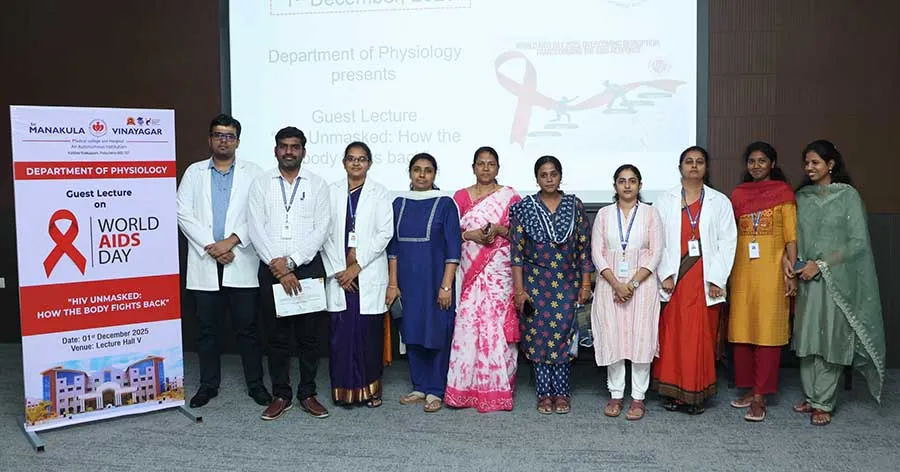
HIV Masked : How the Body fights back
1. Introduction
- To improve students’ understanding of HIV infection and immune responses.
- To create awareness about advances in HIV testing and diagnosis.
- To sensitize students regarding prevention, early detection, and importance of public health measures.
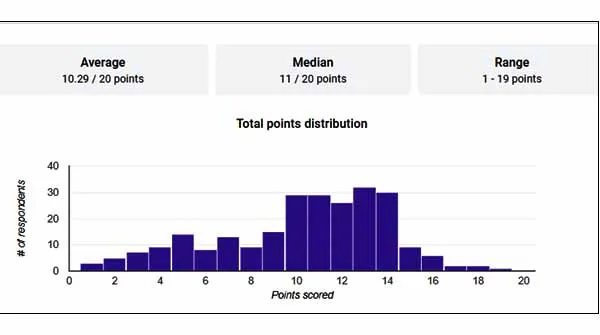
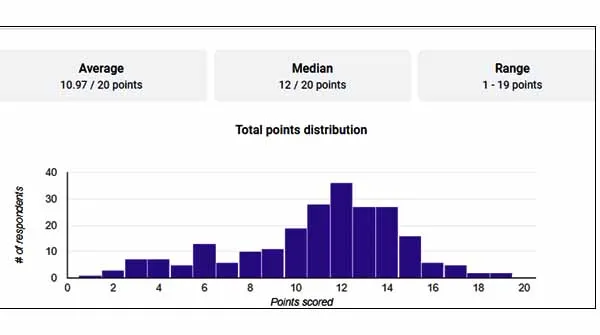
- To assess knowledge gained through pre-test and post-test.
3. Programme Schedule
| Time | Topic | Speaker |
| 02:30 PM – 03:00 PM | Breaking the Shield: How HIV Disrupts Immune Defence | Dr. P. Niveditha, MD, PhD, Senior Assistant Professor, Dept. of Physiology, Stanley Medical College, Chennai |
| 03:00 PM – 03:30 PM | The Science Behind HIV Testing: What You Should Know | Dr. Udhaya Sankar R, Professor, Dept. of Microbiology, SMVMCH, Puducherry |
4. Programme Summary
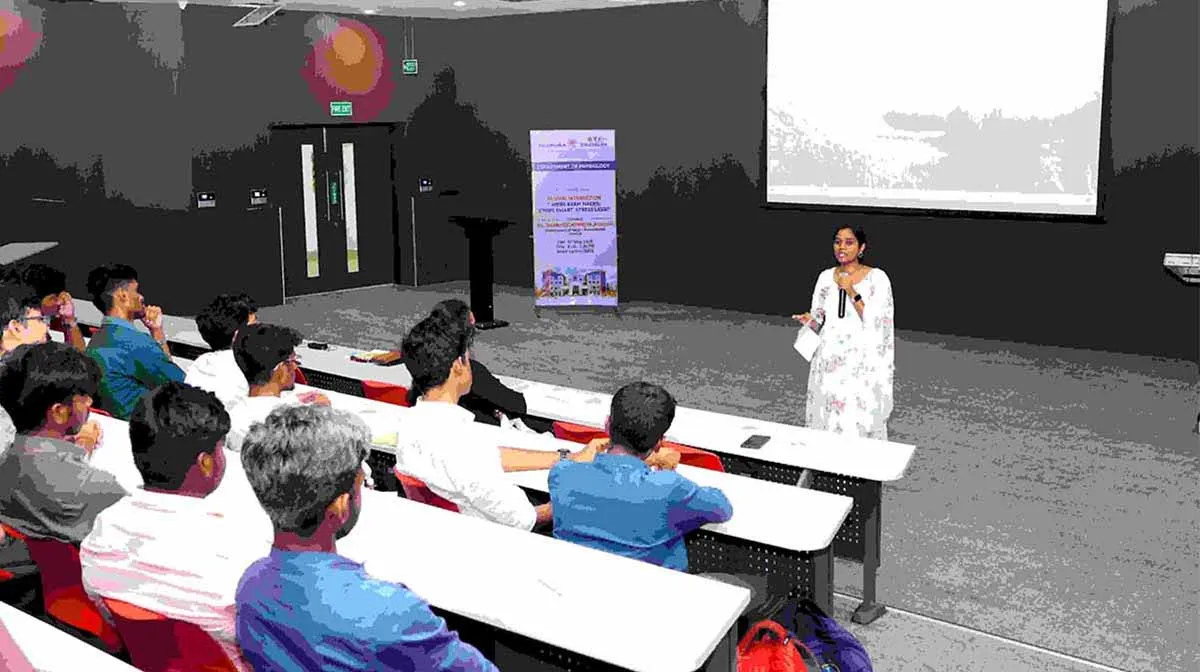
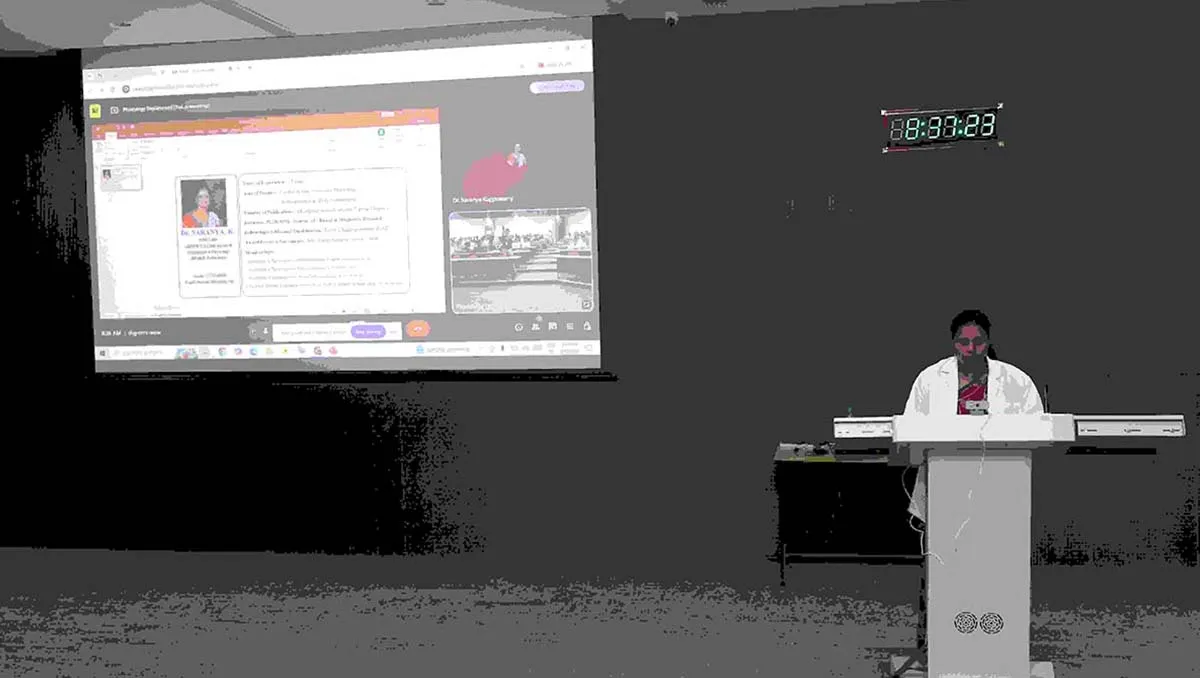
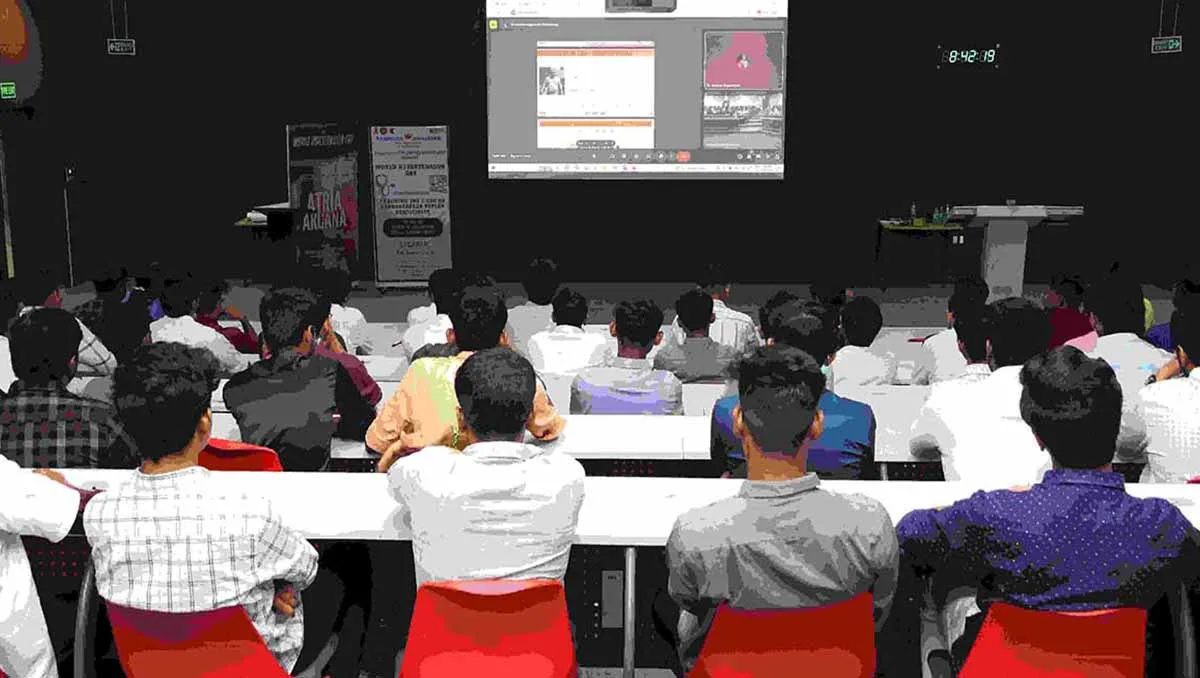
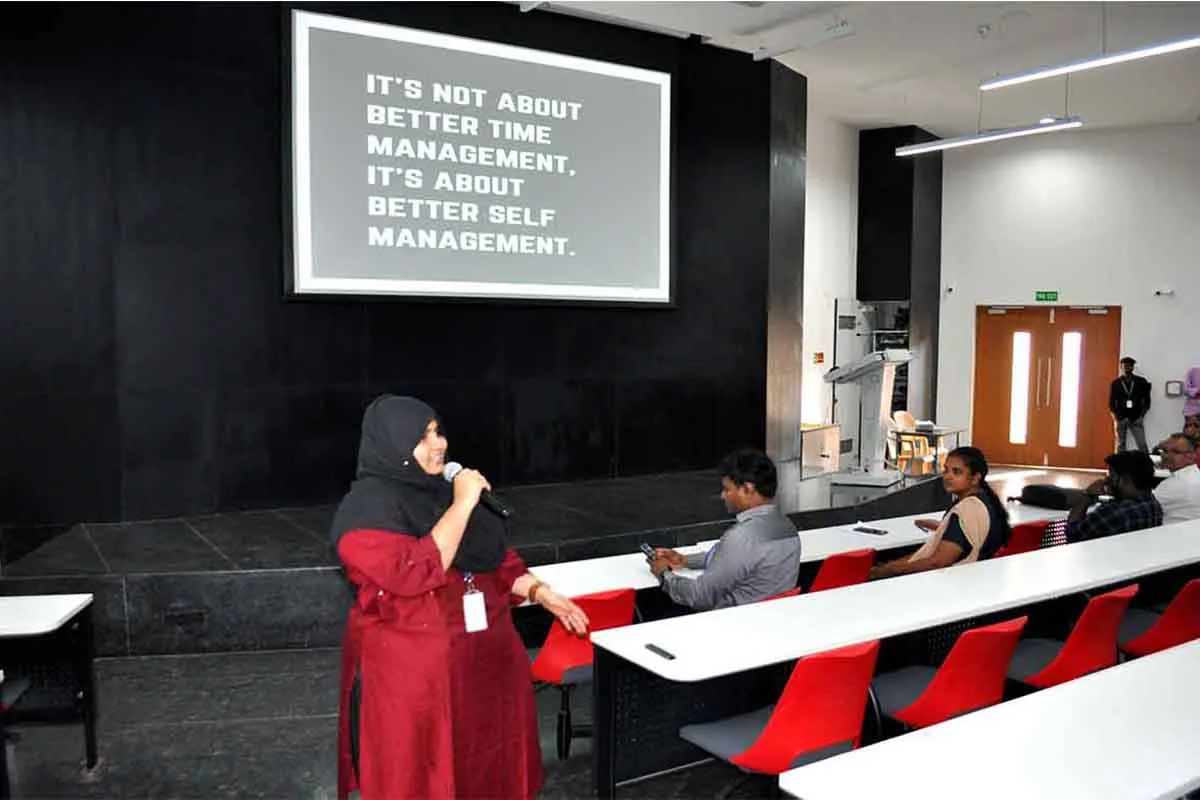
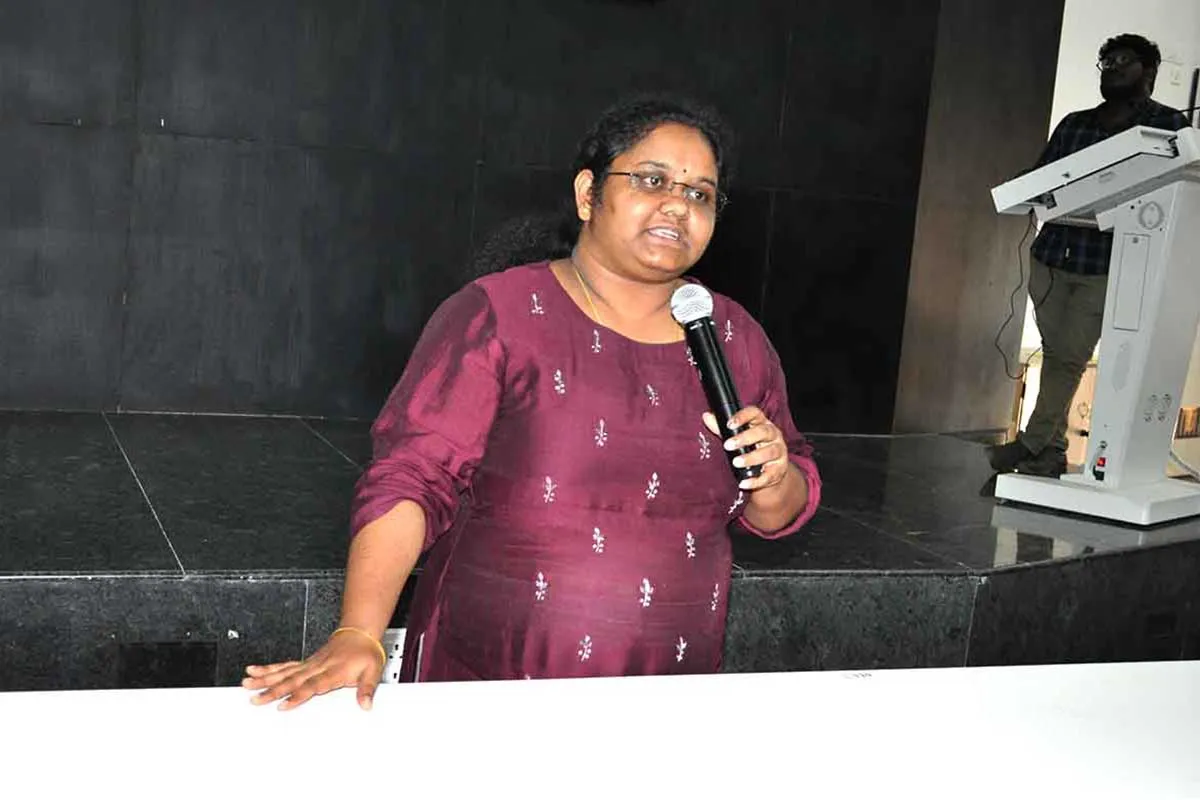
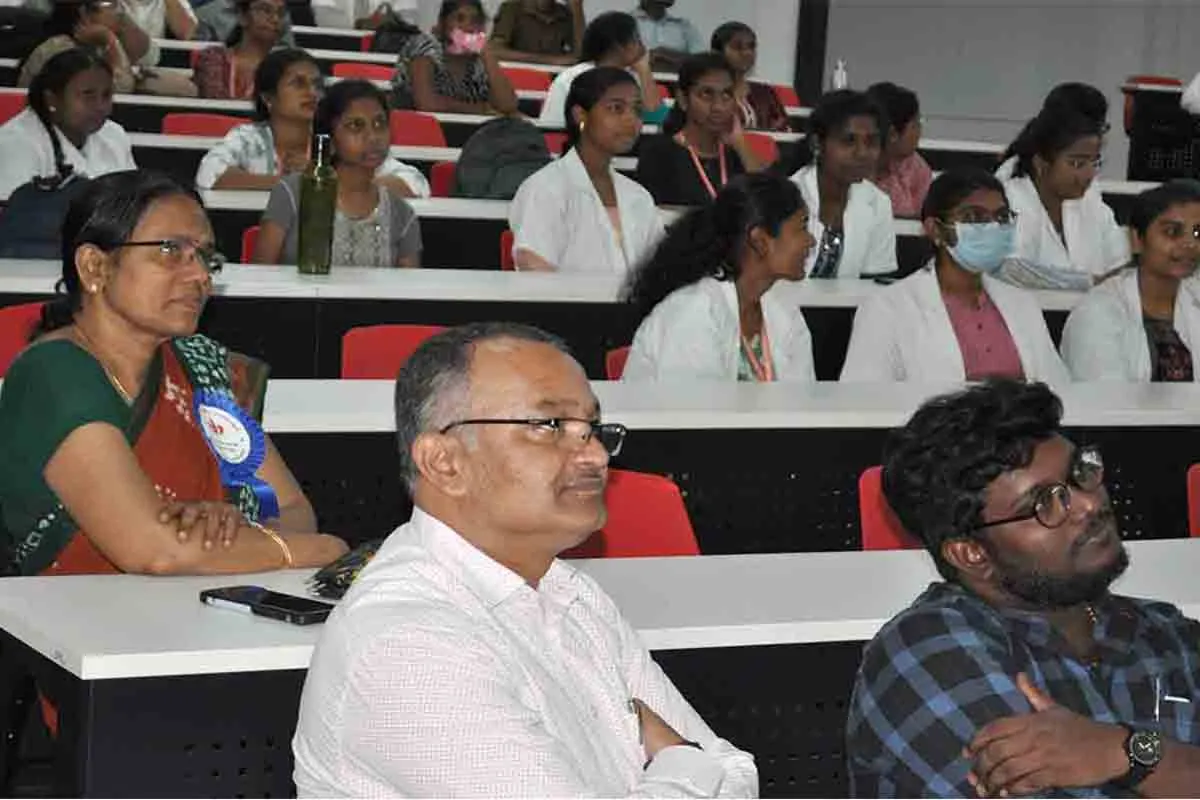
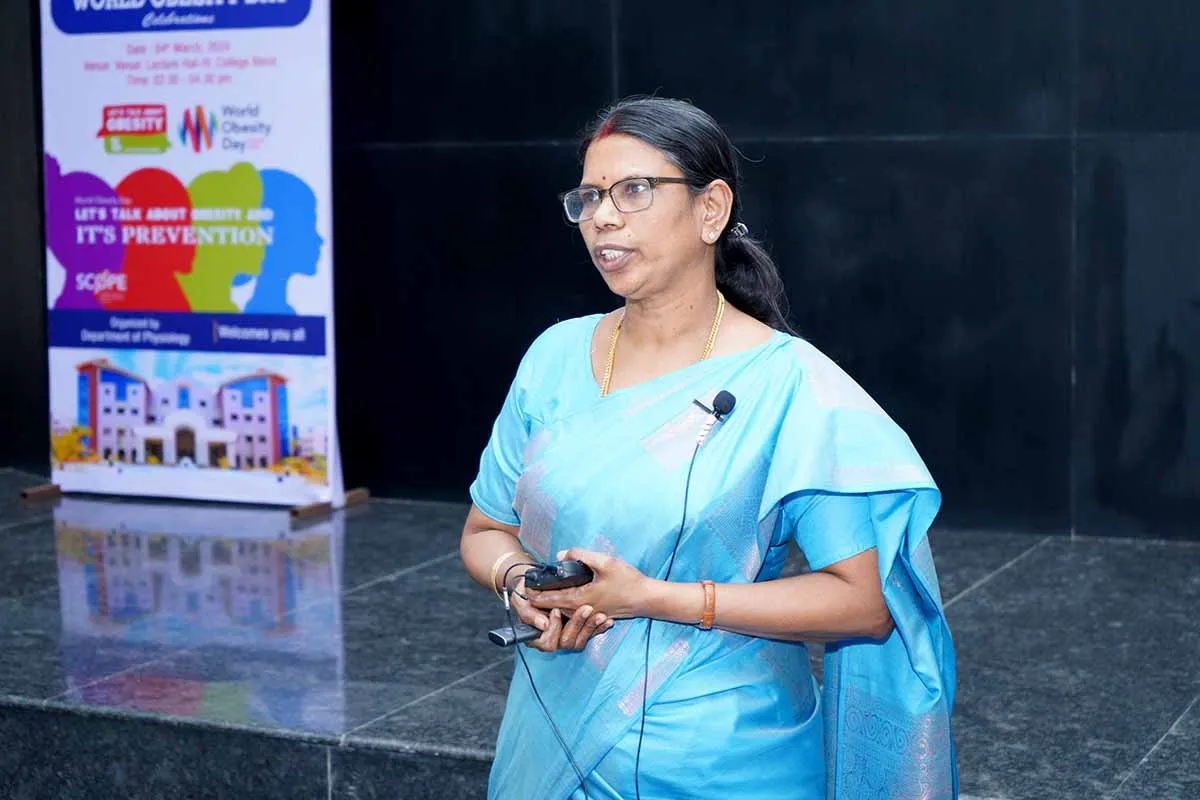
The event began with a brief introduction highlighting the importance of HIV awareness among medical students. Dr. P. Niveditha delivered an insightful lecture on HIV pathogenesis, explaining how HIV targets CD4+ T-cells, mechanisms of immune evasion, and factors contributing to disease progression. This was followed by Dr. Udhaya Sankar, who discussed modern HIV diagnostic methods including ELISA, rapid tests, Western blot, and molecular techniques such as PCR and viral load estimation. He emphasized the importance of early diagnosis, counselling, confidentiality, and prevention strategies. Students actively participated, asked questions, and expressed improved clarity about clinical and diagnostic aspects of HIV.5. Pre-Test and Post-Test
A pre-test was conducted to assess baseline knowledge of students about HIV transmission, immune response, and diagnostic methods. A post-test was conducted after the expert sessions to evaluate improvement in knowledge.6. Feedback Summary
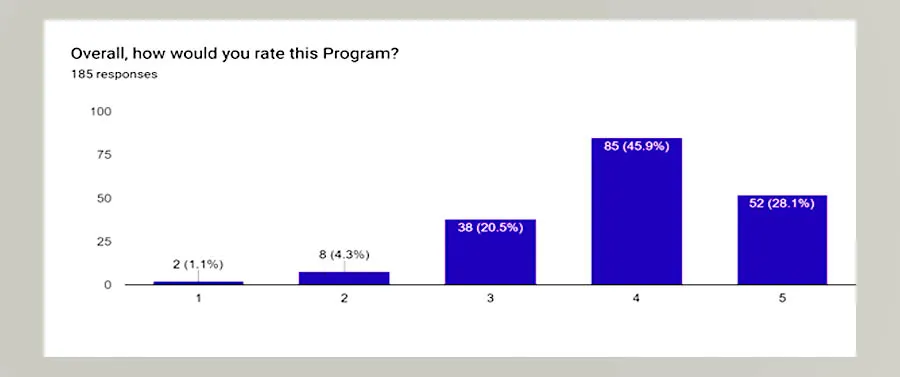
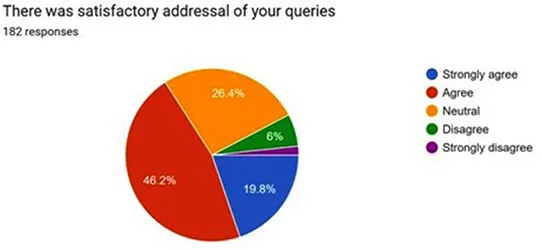
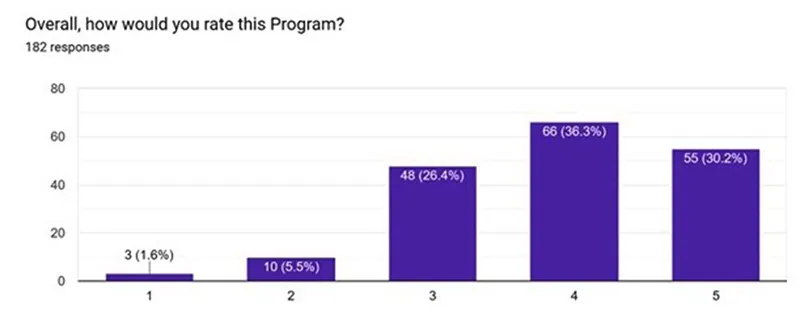
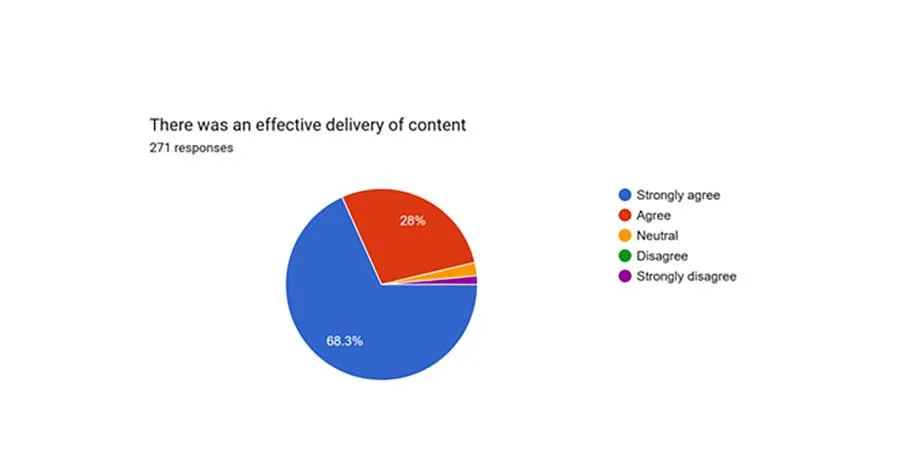
Students appreciated the clarity of the talks, real-life clinical examples, and relevance to current public health challenges. Many expressed interest in further sessions on virology and immunology.7. Conclusion
The World AIDS Day programme successfully enhanced awareness and knowledge among MBBS students. The improvement in post-test scores indicates the effectiveness of the sessions. The Department aims to continue such educational initiatives to promote health awareness and professional competence.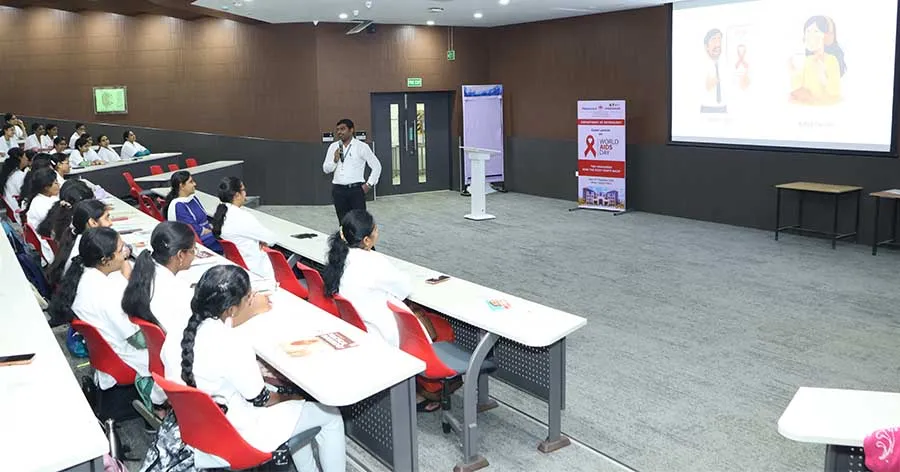
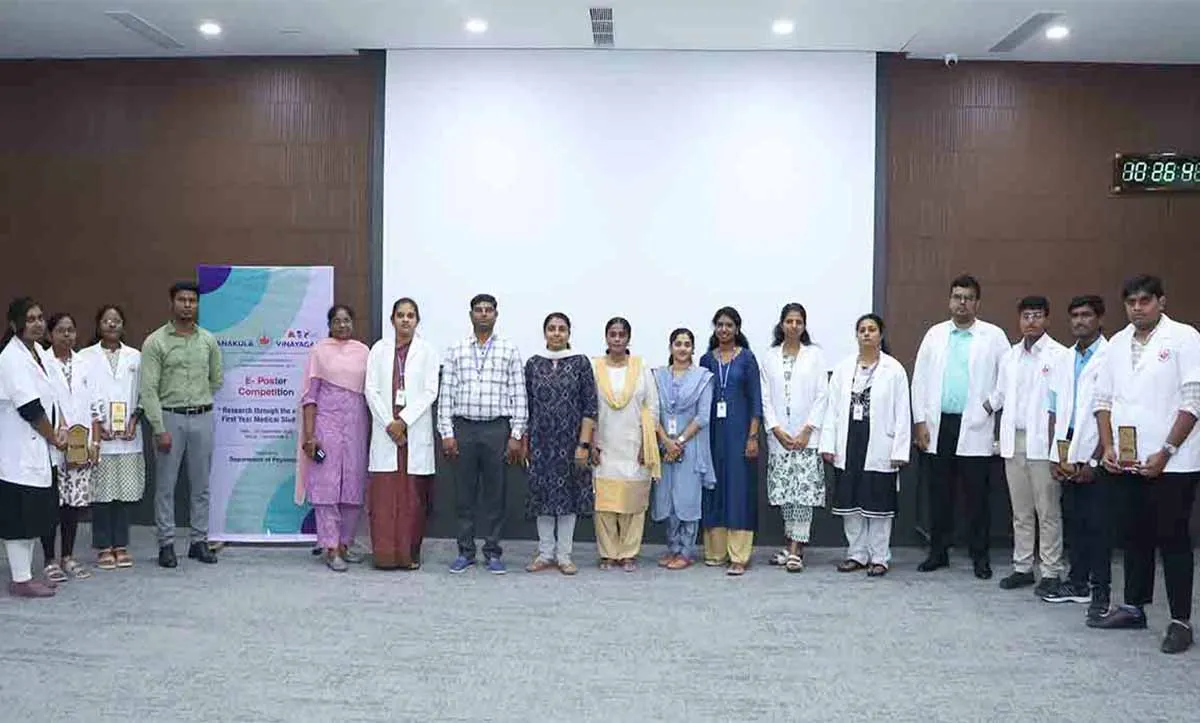
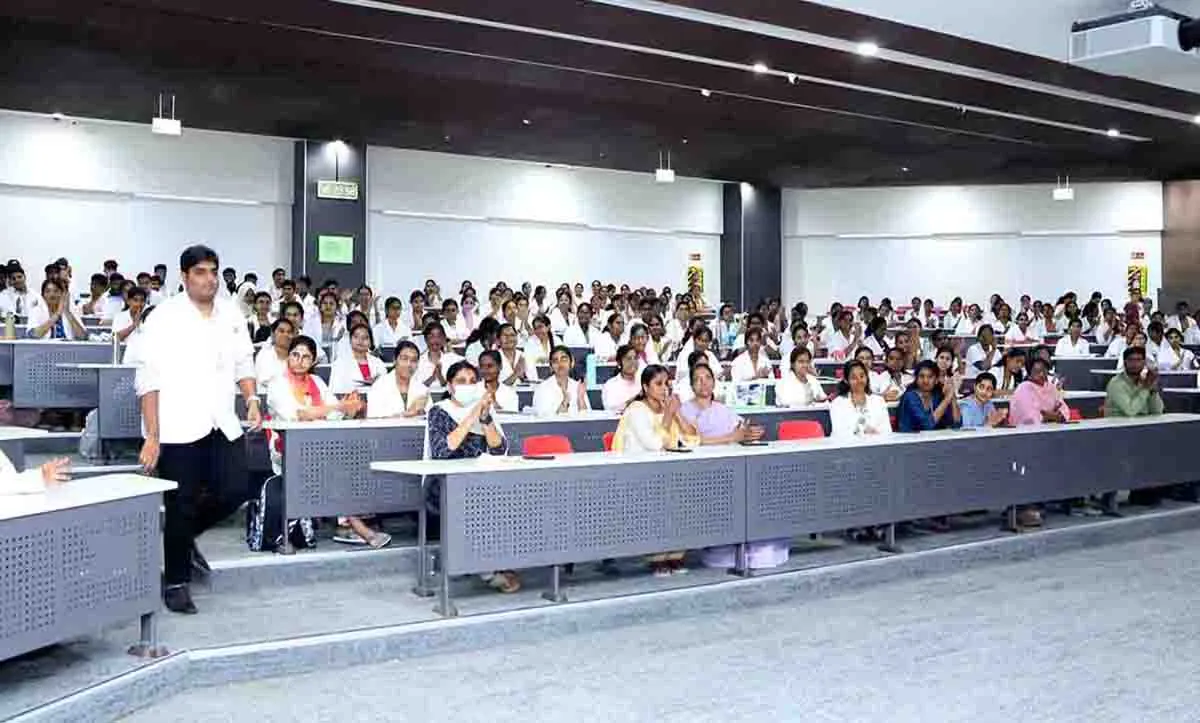
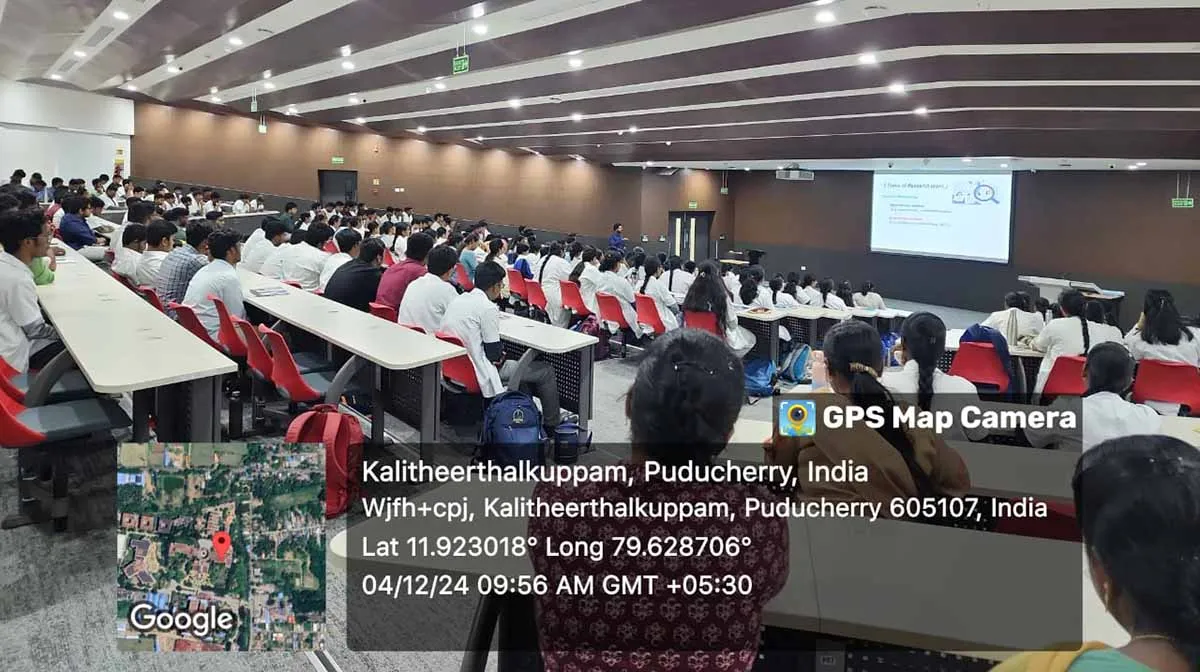
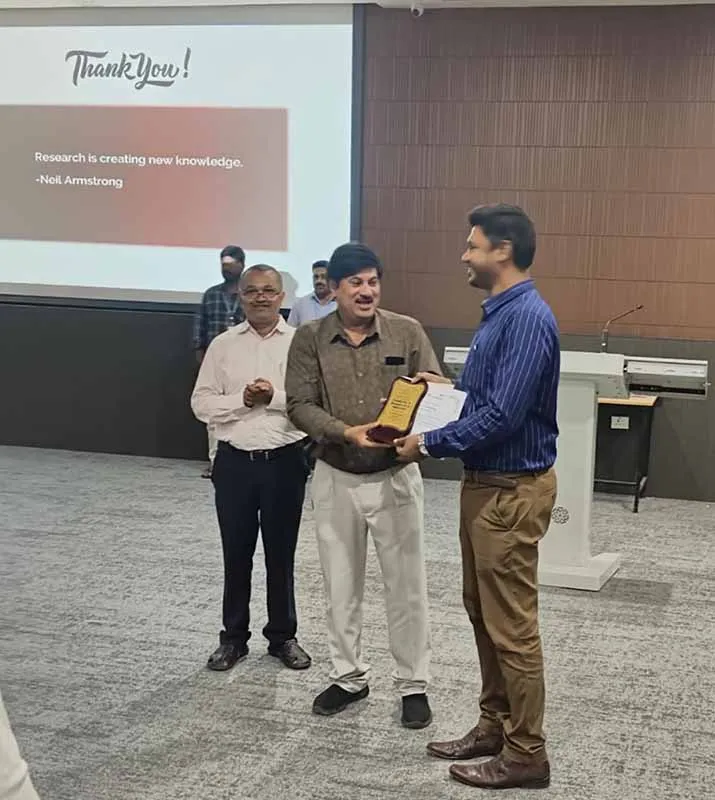
Research Through the Eyes of First Year Medical Students”
Objectives of the Event
- To cultivate research interest among first-year MBBS students.
- To encourage scientific thinking and creativity through poster presentation.
- To provide a platform for students to develop communication and presentation skills.
- To introduce students to the basics of research methodology and scientific documentation.
- Scientific accuracy
- Creativity and visual clarity
- Relevance and depth of content
- Effectiveness of explanation and communication
Outcomes of the Event
- Improved understanding of foundational research principles among students.
- Enhanced confidence in scientific communication and presentation skills.
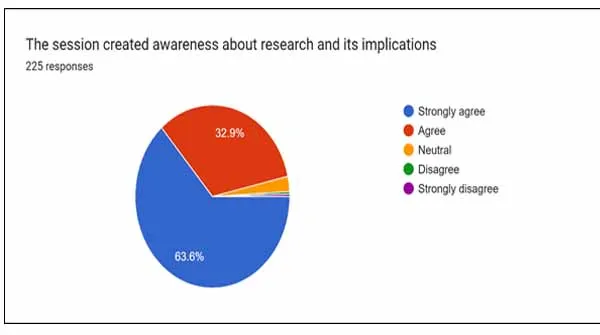
- Greater awareness of the relevance of research in medical education.
- Identification of students with strong research aptitude and creativity.
- Strengthened student–faculty engagement, fostering mentorship opportunities.